
Dental Braces Treatment

Dental braces treatment is a common part of orthodontic care that gradually moves teeth into a more balanced position and improves how the upper and lower teeth meet. People look for dental braces treatment in Ghaziabad and elsewhere for reasons such as crowded teeth, gaps, or a bite that does not fit together comfortably. This guide explains what braces are, why orthodontic treatment may be advised, the main types of braces and aligners, and how to care for teeth during treatment.

What Are Dental Braces?

Dental braces are orthodontic appliances that apply gentle, continuous pressure to the teeth. Over time, the bone and tissues around the teeth adapt to this pressure, allowing teeth to shift position. Fixed braces usually include brackets bonded to the teeth, an archwire that guides movement, and small ligatures or bands that hold the wire in place. Elastics (rubber bands) are used in some cases to help correct the way the jaws meet. The dentist adjusts these parts at scheduled visits.

Why Is Orthodontic Treatment Required?

Orthodontic treatment is advised for oral health and function as well as appearance. Crowded or misaligned teeth can be harder to clean, which may make plaque build-up more likely, and some bite problems can affect chewing comfort or speech. Not every alignment variation needs treatment, so a clinical examination is needed to decide whether it is suitable for an individual.

Contact Us

Common Dental Alignment Problems

Dentists commonly describe the following problems:


Crowding

Not enough space for all teeth to sit in a regular line.

Spacing

Gaps between teeth.

Overbite

The upper front teeth overlap the lower teeth more than usual.

Underbite

The lower front teeth sit in front of the upper teeth.

Crossbite

Some upper teeth sit inside the lower teeth when biting down.

Open bite

The front or side teeth do not meet when the mouth is closed.

Different types of Dental Braces

Several appliances are used for teeth alignment treatment. Suitability depends on the person’s teeth, bite and oral hygiene, and the choice is made after examination and discussion with the treating dentist.
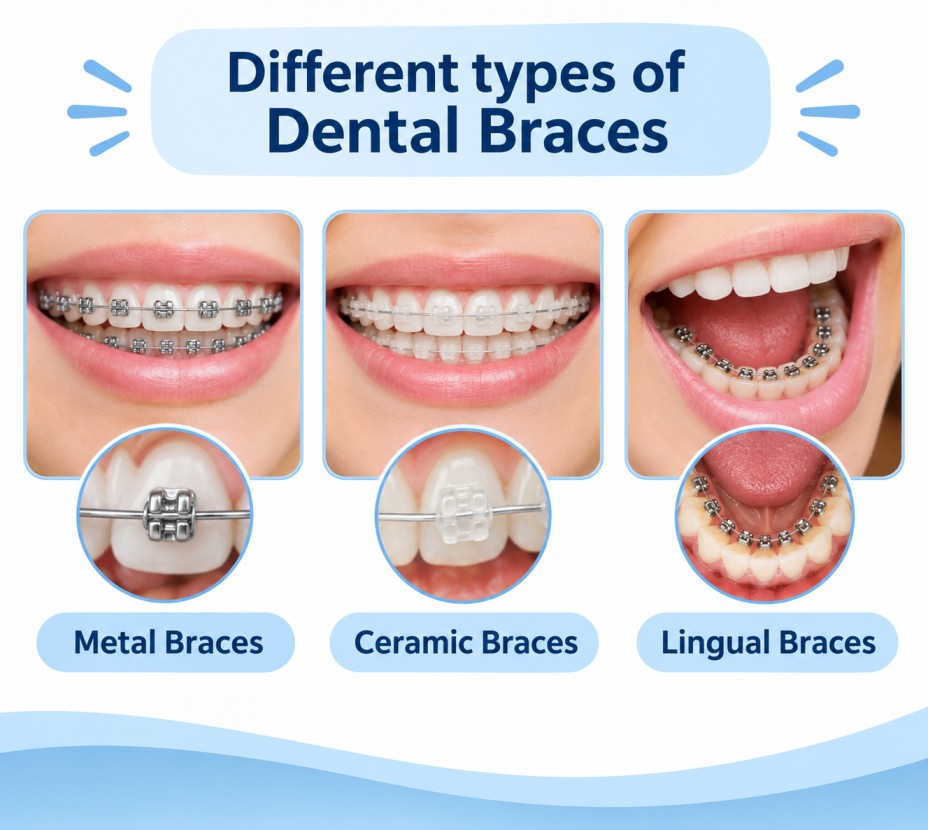
Types of dental braces: Metal, Ceramic and Lingual braces.

Clear Aligners (Separate from Fixed Braces)

Clear aligners are not braces in the traditional sense. They are a series of removable, transparent trays, each shaped slightly differently, that move teeth in small steps. They are usually worn for around 20 to 22 hours a day and removed for eating and cleaning, so the outcome depends on following the recommended wear time. Aligners may be considered for mild to moderate alignment problems, while some complex tooth movements or jaw-related bite problems may need fixed braces or other approaches. Progress is reviewed at regular visits.

How Does Teeth Alignment Treatment Work?

Teeth are held in the jaw by roots surrounded by bone and a fibrous ligament. When a steady, light force is applied, the bone on the pressure side is gradually remodelled and new bone forms on the other side, allowing the tooth to move. Because this depends on the body’s tissue response, movement is gradual and the pace varies from person to person.

Who May Require Dental Braces?

Dental braces treatment may be considered for children, teenagers and adults. A dentist may suggest an evaluation for crowded, overlapping or widely spaced teeth, front teeth that stick out, a bite that does not close properly, difficulty chewing, or early or late loss of baby teeth. Children are often assessed around 7 to 9 years as permanent teeth appear, and adults can also have treatment if their gums and supporting bone are healthy. Existing decay or gum disease is usually treated first.

Dental Braces Treatment Process

The steps below follow general orthodontic practice, which also applies to dental braces treatment in Ghaziabad. They can differ between patients.

Oral Hygiene During Braces Treatment

Brackets, wires and aligner attachments make it easier for plaque and food debris to collect. Brush at least twice a day with fluoride toothpaste and a soft or orthodontic toothbrush, paying attention to the gum line, and use interdental brushes or floss threaders for spaces a toothbrush cannot reach. Limit sugary snacks and drinks, and with fixed braces avoid hard, sticky or very chewy foods that can damage brackets and wires. Clean aligners as advised and drink only plain water while wearing them. Routine dental check-ups remain important during treatment.

Common Considerations During Orthodontic Treatment

  • Discomfort: mild soreness or cheek irritation is common after fitting and adjustments and usually settles within a few days.
  • Loose parts: a bracket, wire or band that comes loose should be reported so it can be repaired.
  • Speech and eating: a short adjustment period may occur, especially with lingual braces and aligners.
  • Oral health risks: poor hygiene can lead to gum inflammation, decay or white spot marks on the teeth.
  • Root changes: minor shortening of tooth roots (root resorption) can occur in some patients and is monitored.
  • Relapse: teeth can drift after treatment if retainers are not used as advised.
  • Individual variation: duration and outcomes differ between individuals, and no specific result can be assured.
Severe or persistent pain, swelling, or mouth injury from an appliance should be assessed by a dentist.

Frequently Asked Questions (FAQs)

Is dental braces treatment painful?

Most people feel some pressure or mild soreness for a few days after fitting and after adjustments. Soft foods and pain relief advised by the dentist or pharmacist are often used. Severe or persistent pain should be checked.

There is no single age. Children are often assessed around 7 to 9 years, many begin treatment in their early teens, and adults can also be treated if their teeth and gums are healthy. A dental examination helps decide the timing.

Treatment commonly lasts about one to three years, though simple cases may be shorter and complex cases longer. Duration depends on the alignment problem, the appliance and how well instructions are followed.

No. Fixed braces are bonded to the teeth, whereas clear aligners are removable trays. A dentist decides which approach is clinically appropriate after examination.

Children should use age-appropriate fluoride toothpaste in the recommended quantity. Parents should supervise brushing, especially in younger children, to ensure proper cleaning.

Sometimes permanent teeth begin erupting behind milk teeth, particularly the lower front teeth. This is commonly called shark teeth. A dental examination can help determine whether monitoring or treatment is needed.