If you have ever mentioned a root canal to friends or family, chances are someone had a horror story to share. Maybe it was a painful experience from years ago, or something they heard second-hand. After enough of these stories, it is easy to feel nervous before you have even seen a dentist.
Here is something worth knowing: in many cases, the toothache caused by an infected tooth is more painful than the root canal treatment itself. Modern root canal treatment is usually carried out under local anaesthesia, which numbs the tooth and the area around it. This article explains why the treatment has such a reputation, what it actually feels like, and what to expect at each stage.
Why do people think root canals are painful?
A few things explain the frightening reputation.
First, people often see a dentist only when the toothache has become impossible to ignore. By then the tooth may be badly inflamed or infected. They remember how much it hurt around the time of the appointment and naturally link that pain with the treatment.
Second, older experiences are still retold. Dental techniques and anaesthesia have improved over the years, but stories from long ago continue to circulate. Finally, not knowing what happens during the procedure can make it seem more intimidating than it is.
What does a root canal feel like?
The honest answer depends on the stage of treatment.
Before treatment: the tooth may already hurt
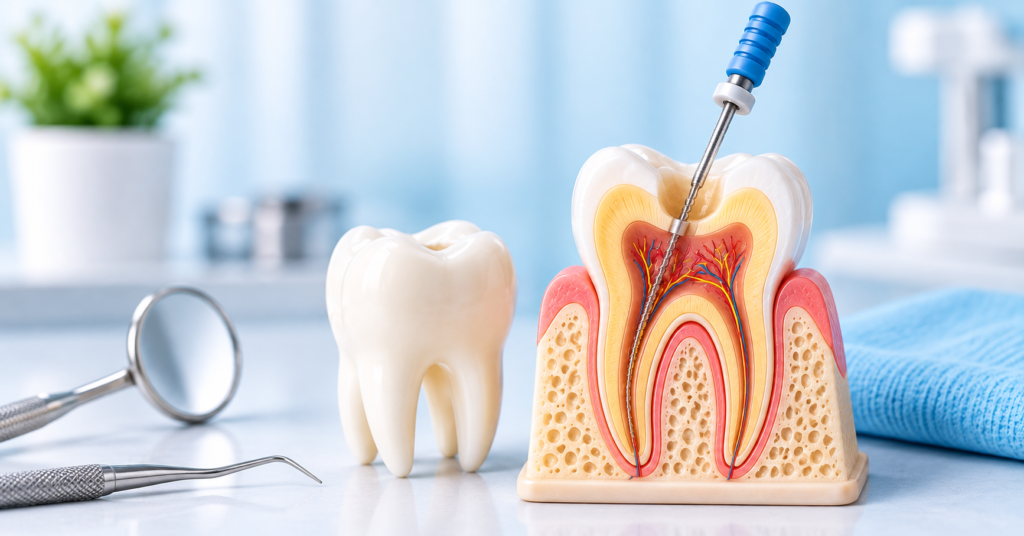
An infected or damaged tooth can cause a constant ache, sensitivity to hot or cold drinks, pain when biting, and sometimes swelling. This discomfort is often what brings people to a dentist in the first place. The purpose of root canal treatment is to remove the infected tissue causing the problem and relieve that pain.
During treatment: the area is numbed
A root canal is normally performed under local anaesthesia. You may notice pressure, movement or vibration while the dentist works, but you should not feel sharp pain. If you do feel pain, say so straight away. The dentist can pause and check whether more anaesthesia is needed. You do not have to sit through discomfort in silence.
After treatment: some tenderness is normal
Once the anaesthesia wears off, the tooth or nearby gum may feel tender for a few days. This can be more noticeable if the tooth was already infected or sore. The discomfort is usually manageable, and your dentist can advise on suitable pain relief. The treated tooth may also feel slightly different when you bite for a short time.
Everyone experiences discomfort differently. A tooth with a more severe infection or swelling may take longer to settle, and some cases need an additional appointment.
What happens during a root canal?
Knowing the steps can make the appointment feel less daunting. Treatment usually involves:
- Examination and X-ray: The dentist checks the tooth and may take an X-ray to understand the extent of the damage or infection.
- Local anaesthesia: The area around the tooth is numbed before treatment begins.
- Removing the infected pulp: A small opening is made in the tooth and the affected pulp, the soft tissue inside, is removed.
- Cleaning and shaping: The root canals are cleaned, shaped and disinfected to remove bacteria.
- Filling and sealing: The cleaned canals are filled with a suitable material and sealed to help prevent reinfection.
- Restoring the tooth: Depending on the tooth and how much structure remains, a crown may be recommended to protect it and restore its strength.
Many root canal treatments are completed in one or two appointments, though the number of visits depends on the tooth and the extent of the infection. Many people return to their usual routine within a day, but follow the advice your dentist gives for your case.
Common root canal myths: what is actually true?
“A root canal makes you sick.”
The infection inside the tooth is the problem. Root canal treatment removes the infected pulp, cleans the canals and helps preserve the natural tooth.
“It is better to have the tooth pulled.”
If a tooth can be saved, keeping the natural tooth is generally preferable. It helps maintain your bite and the position of neighbouring teeth. Whether a tooth is suitable for treatment can only be decided after an examination.
“It takes weeks of painful appointments.”
Many cases are completed in one or two visits. More complicated teeth may need additional treatment, but this is not the case for everyone.
“A root canal-treated tooth will not last.”
A treated tooth can function for many years when it is properly restored and cared for. Long-term success depends on the condition of the tooth, the final restoration and your oral hygiene.
“I should wait until the pain becomes unbearable.”
Waiting is not advisable. An untreated infection can worsen, cause an abscess and sometimes make it impossible to save the tooth. Early assessment gives you more options.
Signs you may need a root canal
If you notice any of the following, arrange a dental check-up rather than waiting for symptoms to go away:
- A toothache that keeps coming back or does not settle
- Sensitivity to hot or cold that lingers after the food or drink is gone
- Pain when biting or chewing
- Swollen or tender gums near a tooth
- A small pimple-like swelling on the gum
- A tooth that has become darker
- Deep tooth decay or a cracked tooth
These symptoms do not automatically mean you need a root canal. Other dental problems can cause similar signs, so a clinical examination and, where needed, an X-ray are necessary to find out what is happening.
How to recover after a root canal
A little tenderness is common. To help the tooth settle and protect it while it heals:
- Wait until the numbness has worn off before eating, so you do not accidentally bite your cheek or tongue.
- Avoid chewing hard foods on the treated tooth until the recommended restoration is complete.
- Take medicines only as advised by your dentist.
- Continue brushing and flossing gently.
- Attend follow-up appointments and get the final filling or crown done when advised. A temporary filling is not designed to last indefinitely.
When to contact your dentist
Get in touch if the pain is severe, gets worse or continues beyond a few days. Also seek advice if you develop swelling in your face or gums, have a fever, or feel that your bite is uneven. These symptoms should be checked, not ignored.
Feeling nervous about dental treatment?
Dental anxiety is very common, and there is nothing awkward about telling your dentist. A few simple steps can help:
- Say that you are nervous before the procedure starts.
- Agree on a hand signal so you can ask for a pause at any time.
- Ask for each step to be explained in advance if that helps you feel prepared.
- Mention if you have had difficulty getting numb during past dental treatment.
- Bring someone you trust if it makes you more comfortable.
A good conversation before treatment can make a real difference.
Questions to ask before a root canal
It can help to take a short list to your appointment:
- Can this tooth be saved, and what are the treatment options?
- How will I be kept comfortable during the procedure?
- How many appointments are likely to be needed?
- Will I need a crown, and when should it be placed?
- What should I expect afterwards, and which symptoms should I report?
- What is the estimated cost, and what does it include?
- Who should I contact if I have a concern after the appointment?
Frequently asked questions
1. Is root canal treatment painful?
It is usually done under local anaesthesia, so you should feel pressure or vibration rather than sharp pain. Some tenderness afterwards is common and generally manageable. Tell your dentist if you feel pain during the procedure.
2. How long does a root canal take?
Many are completed in one or two appointments. The exact number depends on which tooth is treated and how extensive the infection is.
3. Can I eat after a root canal?
Wait until the numbness has worn off. Until the tooth is fully restored, avoid hard foods that could put pressure on it.
4. How long will a tooth last after a root canal?
With a suitable final restoration, good oral hygiene and regular check-ups, a treated tooth can last for many years. Lifespan varies from person to person.
5. What if I delay root canal treatment?
The infection may spread or worsen, leading to more pain, an abscess or damage to nearby tissues. In some cases the tooth becomes difficult or impossible to save, so persistent symptoms are best assessed early.
6. How much does root canal treatment cost in Indirapuram?
Cost depends on the tooth being treated, the complexity of the case and whether a crown is needed. Ask for an estimate after the examination so you understand what is included.
A final word
You do not have to decide about a root canal based on someone else’s experience. In many cases the pain comes from the infected tooth, while treatment is aimed at its cause. Get the tooth examined, ask whatever is on your mind, and talk openly about any worries.
This article is for general information only and is not a substitute for a dental examination. Every tooth and every patient is different. Follow the advice of your dentist for your individual situation.

Dr. Shalini Sharma is an Endodontist with academic and clinical training in the diagnosis and management of dental conditions affecting the teeth and their pulp. She completed her BDS from Maulana Azad Medical College (MAMC), New Delhi, MDS from Government Dental College (GDC), Amritsar, and Senior Residency at AIIMS, New Delhi. Her clinical focus includes endodontic treatments and the management of conditions affecting the inner tissues of the teeth. Treatment recommendations are based on each patient’s diagnosis, dental history, and individual clinical needs.