
Gum treatment covers the dental care used to prevent, control and manage diseases of the tissues that support the teeth. These conditions are common and often develop slowly, so early signs are easy to miss. This guide explains what gum disease is, why it occurs, how it is usually managed and how it can be prevented. Readers looking for information on gum treatment in Indirapuram, or anywhere else, can use it to understand the general principles before consulting a qualified dental professional.
This article is for general education only and does not replace a personal dental examination.
Dental braces are orthodontic appliances that apply gentle, continuous pressure to the teeth. Over time, the bone and tissues around the teeth adapt to this pressure, allowing teeth to shift position. Fixed braces usually include brackets bonded to the teeth, an archwire that guides movement, and small ligatures or bands that hold the wire in place. Elastics (rubber bands) are used in some cases to help correct the way the jaws meet. The dentist adjusts these parts at scheduled visits.
Gingivitis is the early stage and affects only the gums, which may look red or swollen and bleed when brushed. There is usually no bone loss, and with thorough cleaning and good daily hygiene it can often be reversed.
If inflammation continues, it can extend below the gumline. The gums may pull away from the teeth, forming pockets, and the supporting bone can be gradually damaged. Periodontitis cannot be fully reversed, but it can usually be controlled with professional treatment and consistent home care. Left unmanaged, it may lead to loose teeth.
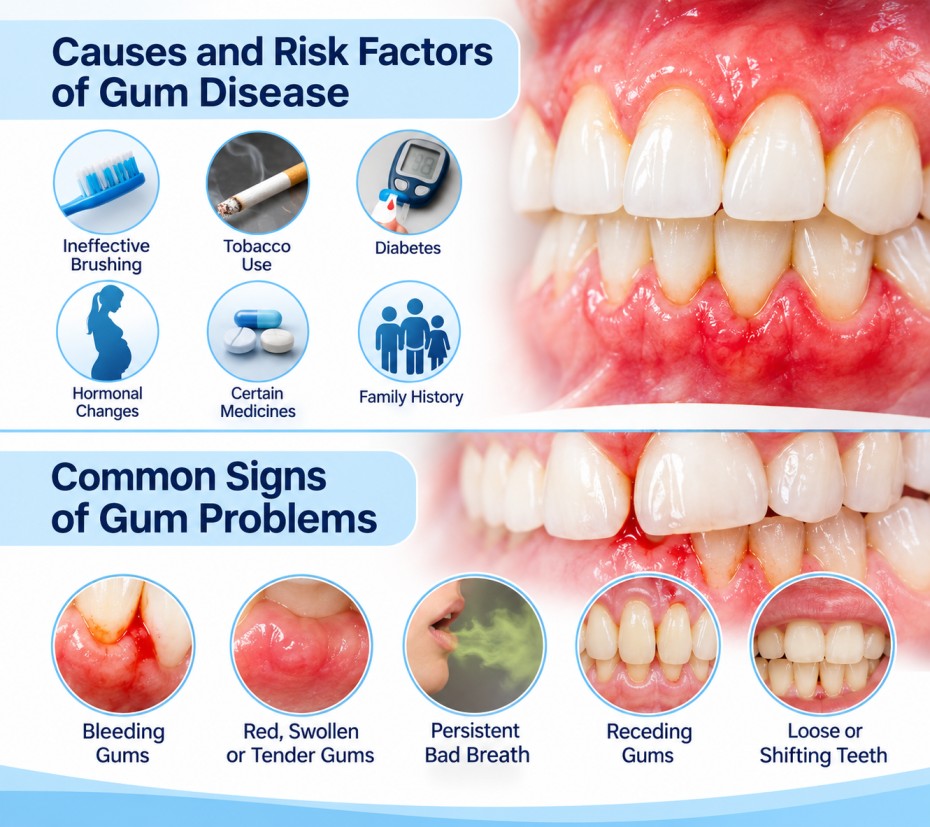
Plaque is the main cause, but these factors can raise the risk or speed up progression:
Gum disease can be painless at first. Possible signs include:
Bleeding gums are not normal even without pain. Only a dental examination can confirm the cause.
Most gum disease is managed first without surgery. The dentist usually measures pocket depth around each tooth with a small probe and may take X-rays to check bone levels.
Scaling removes plaque and hardened deposits (tartar) from the tooth surfaces above and just below the gumline, using hand or ultrasonic instruments.
Root planing smooths the root surfaces below the gumline, making it harder for bacteria to attach and helping the gums settle against the teeth. Local anaesthesia is often used, and extensive cases may need more than one visit.
Gum health is usually re-checked after a few weeks, and regular maintenance cleanings may be advised. Medicated rinses are used only when a clinician considers them necessary.
Many people are managed without surgery. It may be considered when deep pockets or bone defects remain after non-surgical care. Periodontal procedures are generally performed by dentists trained in this area, often periodontists, a recognised specialty. Common procedures include:
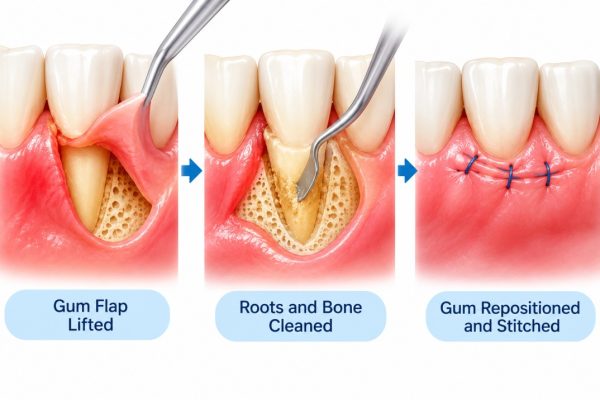
The gum is gently lifted to clean the roots and bone directly, then repositioned and stitched.
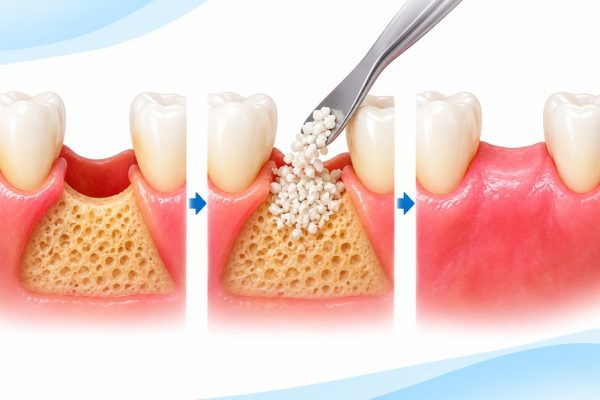
Used in selected cases where bone has been lost.
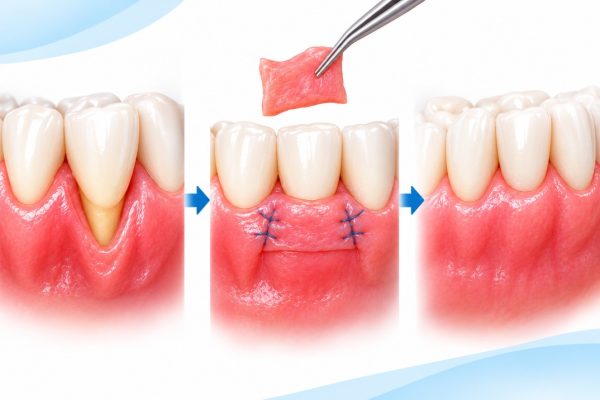
Used in selected cases of significant recession to cover exposed roots.
Results vary with disease severity, oral hygiene, smoking and general health, and no procedure can be guaranteed.
After scaling, gums may feel tender and teeth briefly sensitive. After surgery, mild swelling and discomfort are common. General advice often includes:
Heavy bleeding, increasing swelling, fever or severe pain should be reported to the treating dentist promptly.
Most gum disease is preventable. Helpful habits include:
Severe or persistent pain, swelling, or mouth injury from an appliance should be assessed by a dentist.
Gingivitis may improve with effective brushing, cleaning between the teeth and a professional cleaning. Periodontitis does not resolve by itself and needs professional management.
Local anaesthesia is commonly used, so procedures are usually tolerable. Some soreness afterwards is common and generally settles within a few days.
Most often they are plaque-related, but other causes exist, such as certain medicines or blood disorders. An examination helps identify the cause.
Gum tissue generally does not regrow by itself. Treatment focuses on controlling the cause, and grafting may be considered in selected cases.
Gums often settle within a week or two after non-surgical care. Surgical healing may take longer and varies between individuals.
No. It follows the same clinical principles everywhere: a proper diagnosis, an appropriate plan and good follow-up care.